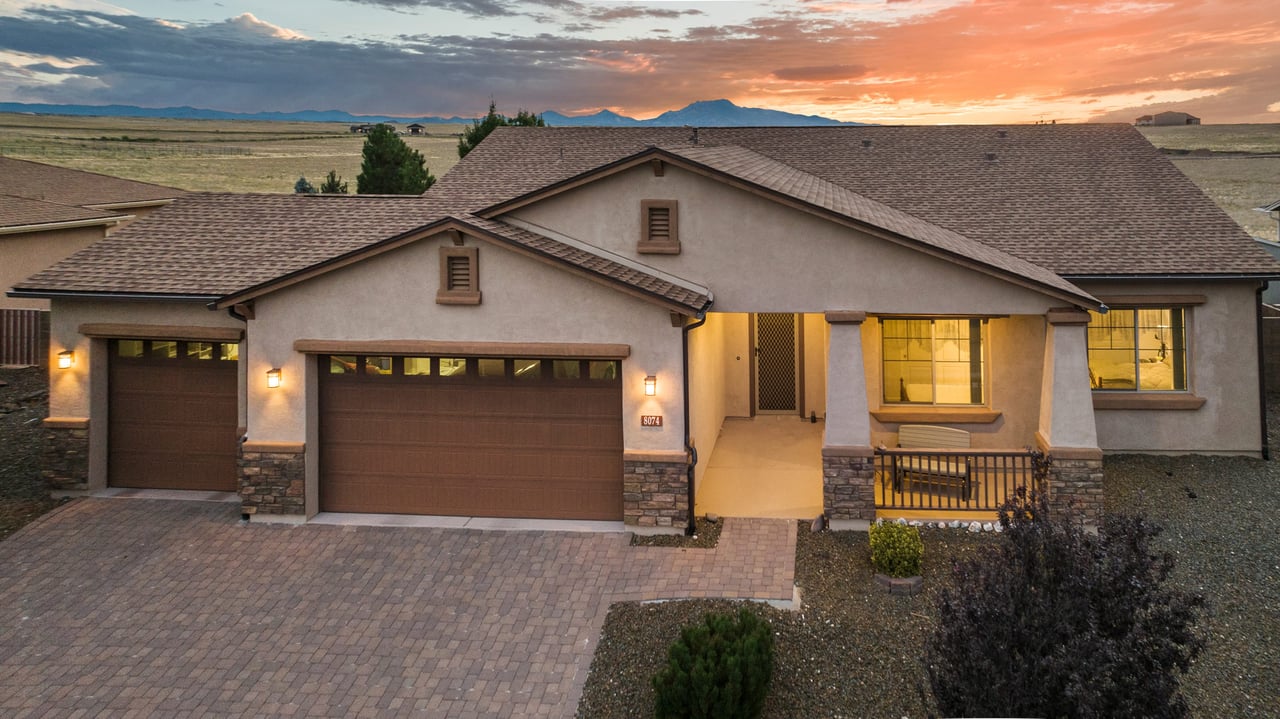
Most Dewey listings do not read like ordinary suburban resales. Descriptions cite well output in gallons per minute, note whether a system is shared, and flag the acreage that made the private well necessary in the first place. Active inventory in town includes properties advertising private wells tested at 13 GPM and above and lots in Apache Knolls with an existing well drilled at 12 GPM. If you are moving here from Phoenix or Scottsdale, the numbers on the flyer are not decoration. They are the transaction.
The thesis of this post is simple, and it runs counter to how most out-of-area buyers approach a Dewey purchase. In Dewey, the well and septic are not inspection line items. They are what dictates your timeline, your disclosures, and in a meaningful share of cases, your ability to close at all. The Arizona rules governing on-site wastewater transfers and private-well disclosures were written to protect buyers, but they also introduce a schedule and a paperwork trail that a conventional city closing does not have. Understanding that schedule before you write an offer is the difference between a clean 40-day close and a scramble.
The Six-Month Clock Nobody Tells You About
The single most misunderstood requirement in a Dewey transaction is the ADEQ transfer-of-ownership septic inspection. Under Arizona Administrative Code R18-9-A316, the seller of a property served by a conventional septic tank or alternative system must retain a qualified inspector to perform the transfer-of-ownership inspection within six months before the date of property transfer, and the inspector prepares a Report of Inspection form and provides it to the seller. If the last inspection was seven months ago, it does not count. The clock resets.
Two details from that rule matter more than the rule itself:
- Except in rare circumstances described on the Report of Inspection form, the septic tank must be pumped as part of the inspection. That is not the inspector's discretion. It is the default.
- The requirement to inspect within six months prior to property transfer is a provision of Arizona rule and takes precedence over any conflicting terms in the property transfer contract.
Read that second point twice. A purchase contract that tries to waive the inspection, or one that references a stale inspection from the seller's file, does not override the state rule. If the seller wants a smooth close, the pump-and-inspect happens on the seller's dime and on the seller's schedule, inside that six-month window.
After closing, the paperwork shifts to the buyer. Within 15 calendar days after the date of property transfer, the buyer must submit a completed Notice of Transfer form for the change of ownership and file it with the proper agency. The Notice of Transfer filing fee is $70.00 for forms sent to ADEQ and is set by rule. The Report of Inspection itself does not go to the state. The ROI is not filed with ADEQ, as it involves communication on the status of the onsite wastewater system between the seller and the buyer. It stays with the file, and it is the buyer's proof that the system was in operable condition on the day of transfer.
There is one exemption worth knowing, because it comes up often on new construction and on estate sales of unoccupied land. If ADEQ authorized construction of the on-site wastewater treatment facility under its permitting program, but the facility was not put into service before the property transfer, the transfer-of-ownership inspection is not required. The Notice of Transfer still gets filed. A brand-new home with a fresh septic that has never seen a load of dishes does not need to be pumped for the sale. Anything else does.
The ADEQ program page for onsite wastewater is the source document at azdeq.gov if you want to read the rule directly.
Why the Well Column Is the One That Kills Deals
Septic is procedural. Wells are legal. That is the distinction Dewey buyers need to hold in their heads.
A drilled well in Arizona is not personal property that transfers with a bill of sale. Drilling and constructing a water well creates a permanent change to real property and cannot be separated from the land, therefore the well becomes a part of the land. If the well sits on the parcel you are buying, it is yours at closing. If it sits on the neighbor's parcel and delivers water to yours, you are buying a contractual right, not a piece of property. That contractual right is where transactions unravel.
The Arizona Department of Water Resources is explicit about the limits of its jurisdiction. The Department does not regulate shared well agreements, shared well agreements are considered a civil matter between the parties who share the well, and disputes arising between parties regarding a shared well agreement are not resolved by the Department and may result in the parties having to file a civil action and resolve the matter in court. If your shared well agreement is unclear about who pays for a new pump when it fails in February, ADWR will not adjudicate that. Your recourse is a civil suit against your neighbor.
That is why the recording matters. A well-drafted shared well agreement should be recorded with the Yavapai County Recorder so that future buyers of any parcels of land subject to the agreement are notified, with all relevant parties signing in front of a notary. If you are buying into a shared well and the seller cannot produce a recorded agreement, that is not a minor cleanup item. That is the deal.
The Arizona REALTORS trade group closed part of this gap with two mandatory disclosure forms that every private-well transaction in the state uses. The Arizona Realtors group has authorized two forms that all Realtors must use to inform buyers of real estate served by private water wells, and they must be used for each transaction involving private or shared water wells: the Domestic Water Well Addendum and the Domestic Water Well Water Use Addendum Seller's Property Disclosure Statement. The addendum tells you the property is on a well. The disclosure statement is where the seller writes down every technical detail they have. Read it carefully. The blanks are where the questions live.
What the Well Disclosure Should Answer
The disclosure statement is only as good as what the seller knows, and Arizona sets a low floor on what they are required to have tested. Arizona law does not require any periodic water testing for domestic wells. There is no annual compliance sample sitting in a file somewhere. If the seller has never tested the water, the disclosure will say so. ADHS recommends testing a new well for arsenic, fluoride, lead, nitrates, total coliform bacteria, total dissolved solids, and uranium. On a Dewey property, that testing is a buyer-side expense and a buyer-side decision, and it is one of the few due-diligence tasks that no third party will trigger for you.
One more mechanical detail. If you drill a new well or modify an existing one on a small parcel, Yavapai County steps in ahead of ADWR. If water from your well, or an existing well being modified or deepened, will be used for domestic purposes on a parcel of land of 5 or fewer acres, the applicable county or local health authority must first review your application prior to submittal to the Department of Water Resources. The Yavapai County Environmental Services page for well permits is at yavapaiaz.gov and is the first stop for anything involving a new bore.
What This Means for Your Timeline and Your Offer
The market backdrop matters here. Dewey-Humboldt runs slower than the western Quad Cities. Local reporting from June 2026 puts the median at $385,000 with roughly 92 days on market, which gives buyers negotiating room that Prescott and Prescott Valley rarely offer. That extra room is where the well-and-septic work happens.
Three practical adjustments to make before you write an offer on a Dewey acreage property:
- Add contingency language for the ROI, not just the home inspection. The septic pump-and-inspect is a separate scope. If the seller has not scheduled it yet, your contract should give them a defined window to complete it and deliver the Report of Inspection to you.
- Ask for the shared well agreement upfront. Not at inspection. Not during escrow. Before you sign. If it is not recorded, or if it cannot be located, that is a red flag that predates the price negotiation.
- Budget for water testing separately. The septic inspection tells you the tank works. It does not tell you the water is potable. Those are two different vendors and two different reports.
The Notice of Transfer fee is small. The cost to change ownership of a well with ADWR is $30.00 per well. The ADEQ filing is $70. What costs money is the delay when a shared well agreement is missing, or when the septic inspection has to be redone because the seller pumped the tank eight months ago instead of five.
FAQ
Does the buyer or the seller pay for the septic inspection?
The Arizona rule assigns the inspection to the seller. In practice, that cost is negotiated in the purchase contract like any other closing item, but the responsibility to retain a qualified inspector inside the six-month window sits with the seller.
What if the seller refuses to inspect because they claim the system is exempt?
Only one exemption applies routinely, and it is for systems that were permitted but never put into service. Every other on-site septic in Dewey requires the transfer inspection. The rule takes precedence over contract language attempting to waive it.
Can I close before the Notice of Transfer is filed?
Yes. The Notice of Transfer is a post-closing filing that the buyer submits within 15 calendar days of the transfer date. Many escrow officers handle it as part of closing services.
Is well water tested during a normal home inspection?
No. Water quality testing is a separate scope with a separate lab. Arizona does not require periodic testing on domestic wells, so unless you specifically request and pay for it, your file will not contain a recent panel.
Dewey rewards buyers who understand the mechanics before they fall in love with the acreage. If you are comparing properties here and want a walk-through of how the septic and well pieces will land against your specific offer, Team Schneider works these transactions every month and can flag the friction points before they become surprises. Contact Team Schneider for a Free Consultation.